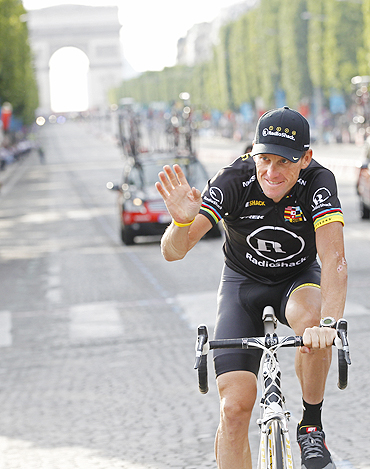
Lance Armstrong drew the curtain down on an amazing career in top-class international cycling on Sunday as a hero to his devoted followers but much less so to the sceptics.
Armstrong, who won the Tour de France a record seven times, helped cycling shift from a sport of tradition and folklore into a modern, professional, global one.
The 38-year-old American, who finished a distant 23rd in his final Tour de France, has won the world's greatest race more than anyone else, reigning on the Tour from 1999-2005.
It seemed impossible in 1999, when he collected the first of his 82 yellow jerseys and the third of 23 stage wins, for anyone to win seven Tours - in particular a rider like Armstrong who almost lost his life to testicular cancer diagnosed in 1996.
His attention to detail and obsession with the Tour are well known but his pure sporting skills and extraordinary strength of character were often overlooked.
On Sunday, in the train taking the Tour peloton to the start of the final stage, Armstrong recalled: "(It was) a very traditional sport, very old school, almost relaxed. We just wiped it all clean and said 'we're gonna analyse every little thing.
"If it's a composition of a team, if it's a diet, if it's reckoning the courses, if it's the tactics, if it's radios, whatever it is, we sort of led the push there."
Like Eddy Merckx, Bernard Hinault or Jacques Anquetil, Armstrong was not interested in being a popular rider. But he came back to the sport at the end of 2008 after three years in retirement, keen to help the plight of cancer sufferers.
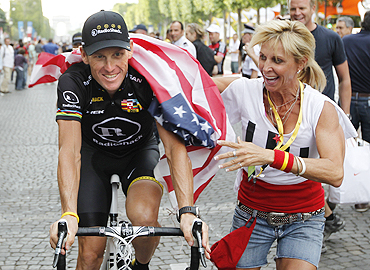
In his domination of the Tour, Armstrong found motivation in duels with his challengers, the most notable being Jan Ullrich, who finished second three times.
Alberto Contador was the other, although they really squared off only once, in 2009. That year, Armstrong lost a psychological battle and ended up third overall, but ready to have another shot at an unprecedented eighth title.
It proved a cruel swansong for the Texan, who started the race with his own RadioShack team, but had to concede defeat in the first mountain stage after losing considerable time following an early crash.
With hope gone of prevailing one last time, Armstrong, battered and bruised, continued in the race with dignity, hanging on for dear life in the mountains.
A long breakaway in the most prestigious stage reminded everyone, if need be, that a champion has to hold his head high.
"I've got my competitive fix for the next 40 years, it will take until about 80 (years old) and then I don't think I will wanna come back," he said with a laugh.
"I find it wonderful to observe that Lance Armstrong really loves the Tour de France," said Tour director Christian Prudhomme.
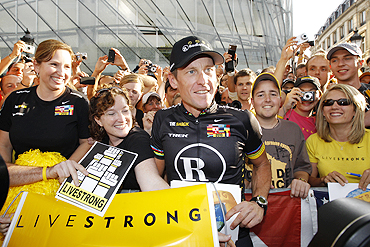
Finally, in return, the Tour de France loved Armstrong, who once had been voted France's least favourite athlete.
Dozens of fans gathered by his team bus every morning, thousands lined up along the roads to support him and millions were glued in front of their TV sets to witness his last Tour.
"Whatever he does, he is a story. He is an incredible character," Frenchman Alain Gallopin, one of RadioShack's sports directors, said.
Armstrong, who reached beyond his sport like no rider before him, is now longing to enjoy days on the beach with his growing family and will race only minor events.
"He's just a legend," said Giro champion Ivan Basso of Italy.
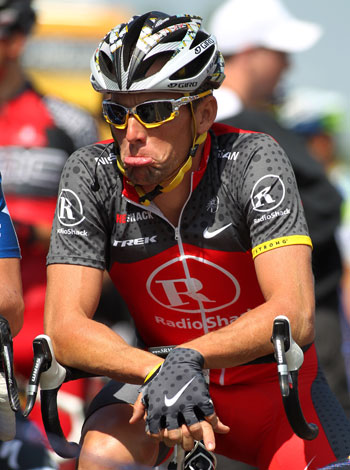
The legend, however, has been under very tight scrutiny.
Although he never tested positive, Armstrong has faced doping allegations throughout his career and the American will have to fight them when he gets back home.
A federal investigation in the US is focusing on whether Armstrong used government money to dope and win his seven Tours with the US Postal team - following allegations made by his former team mate and disgraced 2006 Tour winner Floyd Landis.
"That's not new, it didn't start in May (at the time of Landis's allegations) that started in 1999. I'm so immune to that. That's totally fine, I have no problem with that. I gave up fighting that a long time ago," he said.
In 2005, shortly after his seventh Tour title, French daily L'Equipe claimed samples from the 1999 Tour showed traces of the banned blood-booster EPO.
Armstrong was cleared of any wrongdoing following an independent probe, although then-WADA president Dick Pound questioned the independence of the investigation.
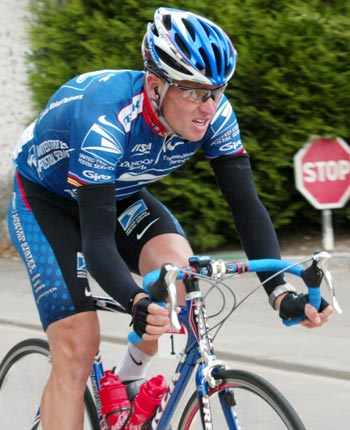
"I can assure you that there is not gonna be a teary-eyed confession from me", said Armstrong.
"I'm 100 per cent confident. I know what I did and didn't do. And I know that the press is ... incredibly sensational, I'm not a fool, that's what they need, that's okay. In the end it will all come out."
Armstrong, who has hired a criminal defence attorney to fight the allegations, is confident the investigation will go his way - eventually.
"We will certainly field the best team but in the end it's a fair competition, that's why ultimately - maybe not yet, maybe not right now - but ultimately it will be a fair competition and I'll get my chance to speak about it," he said.
Asked what his legacy would be, Armstrong, mindful of a modern 24/7 media, blogs and speculation, said: "There's much noise out there for a lot of people.
"Legacies won't ever be the same. If Frank Sinatra lived today, he'd have a much more difficult time being Frank Sinatra."

 © 2025 Rediff.com - Investor Information - Advertise with us - Disclaimer - Privacy Policy - Feedback - About us - Terms of use - Grievances